Showing posts with label Argentina. Show all posts

Monday, September 17, 2012

Pasta Frola (Quince Tart)


Another Argentine recipe? Who am I? I make recipes from home ... not from this place I have lived close to 4 years ... wait. Uh-oh. It occurs to me that, perhaps, maybe, this is my home. And I've come to appreciate the foods I frequently eat. Food that everyone here already loves, so I don't have to insist on them trying my weird foreign food. I'm not sure why I'm such a hold out it took me so long but, inspired by Katie's Argentine Recipe Contest, I gave in. I love pasta frola! I eat this a lot. I want more. Okay, there. I said it.

I did want to make Vivi's recipe with mascarpone, but 2 trips to the supermercado proved useless so I went without it.


Quince Tart (Pasta Frola)
Adapted from David Lebovitz

Note that David's recipe is for a 9 or 10 inch (24 cm) tart pan, though I used a 28 cm pan. I liked the ratio it left me with, but you'll notice less crust atop the tart, plus it was a bit of work to squish and spread the bottom dough out, but it was worth it and I'll do it again. I did use extra quince 'paste' (dulce de membrillo).

  • 1 1/2 cups (190g) flour
  • 1/2 cup (70 g) polenta (cornmeal)
  • 1/2 teaspoon sea salt (I used a little less of fine table salt)
  • 2 teaspoons baking powder
  • 9 Tablespoons  (110 g) unsalted butter, room temperature
  • 1/2 cup (100 g) sugar
  • 1 large egg
  • 1 large egg yolk
  • 1/8 teaspoon almond extract
  • 2 cups (550-600g) quince paste (dulce de membrillo)
  • 2 Tablespoons port
  • 2 Tablespoons raw sugar
Whisk together flour, cornmeal, salt and baking powder - set aside. Beat together butter and sugar, mix in egg, yolk and extract. Slowly add dry ingredients, just until dough comes together. 

Measure out about 325 grams of the dough (about 3/4 of the dough). Pat it into a disk, wrap with plastic wrap and chill. Roll the remaining dough into a log 2-inches in diameter, wrap and chill.

Put quince paste into a bowl with port and mash with a potato masher. Add a splash of hot water if necessary to develop spreadable consistency.

Remove dough from refrigerator and let return to room temp slightly. With the heel of your hand, evenly press into the bottom and sides of an unbuttered removable bottom tart pan. Spread quince evenly over dough. 

Remove log of dough from refrigerator and slice into thin cookies, then lay over the jam. Sprinkle with raw sugar. Bake at 375 F (190 C) for 20-25 minutes, until golden brown. Let cool and serve at room temperature. This is even better the next day.


Make miniature Vigilantes (cheese topped with quince) with any unused membrillo!


Monday, February 13, 2012

Mendoza Wine & Beer!


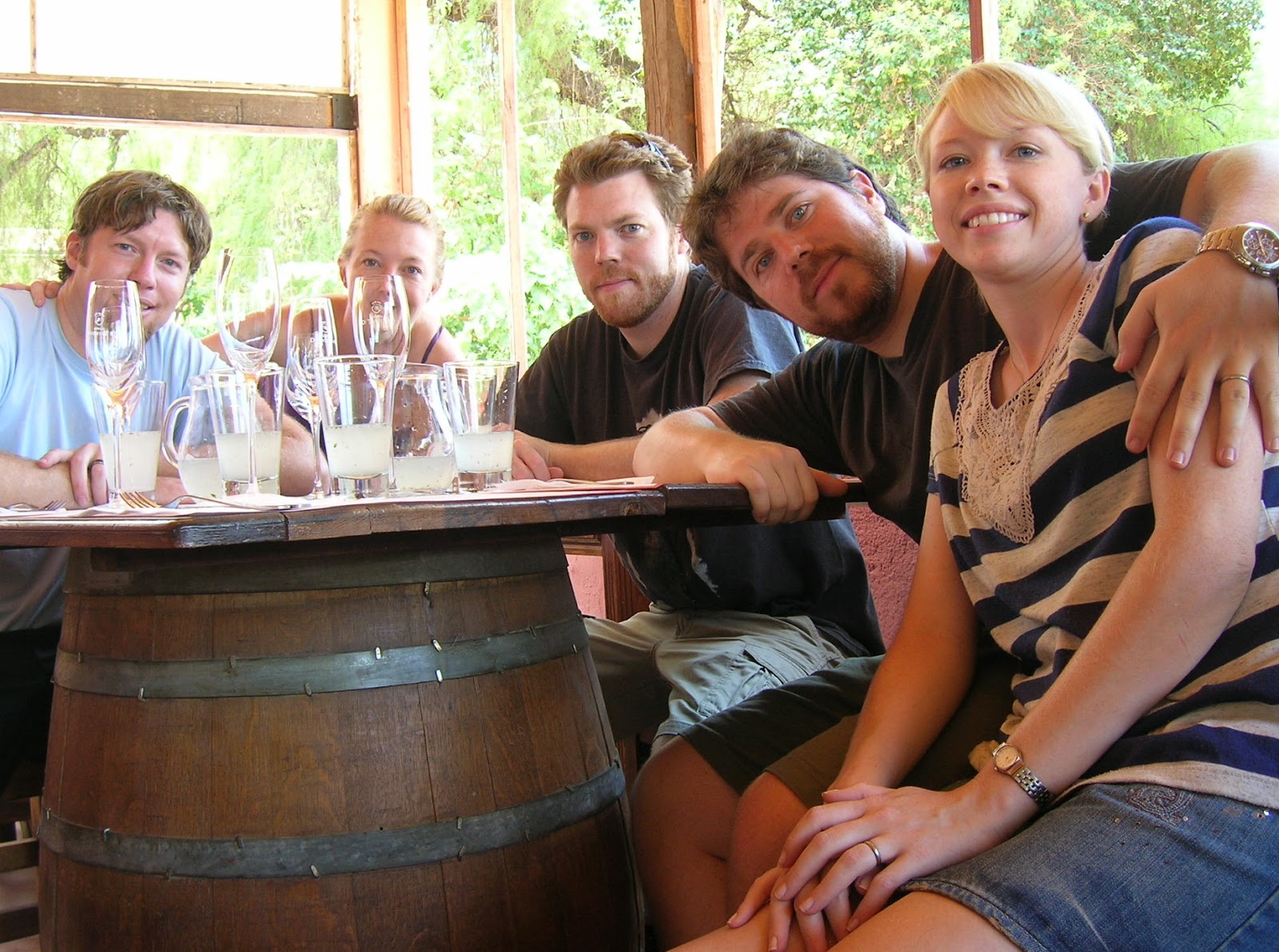
Not long ago, we took a quick trip to Mendoza - the heart of Argentina's wine industry. So here's a brief recap of the 5 days/3 nights we spent there with some great new friends (the nights following and preceding this trip were spent on a bus to/from Rosario, which is not actually a bad way to travel when you consider that you get to play Bingo and are given wine with dinner).


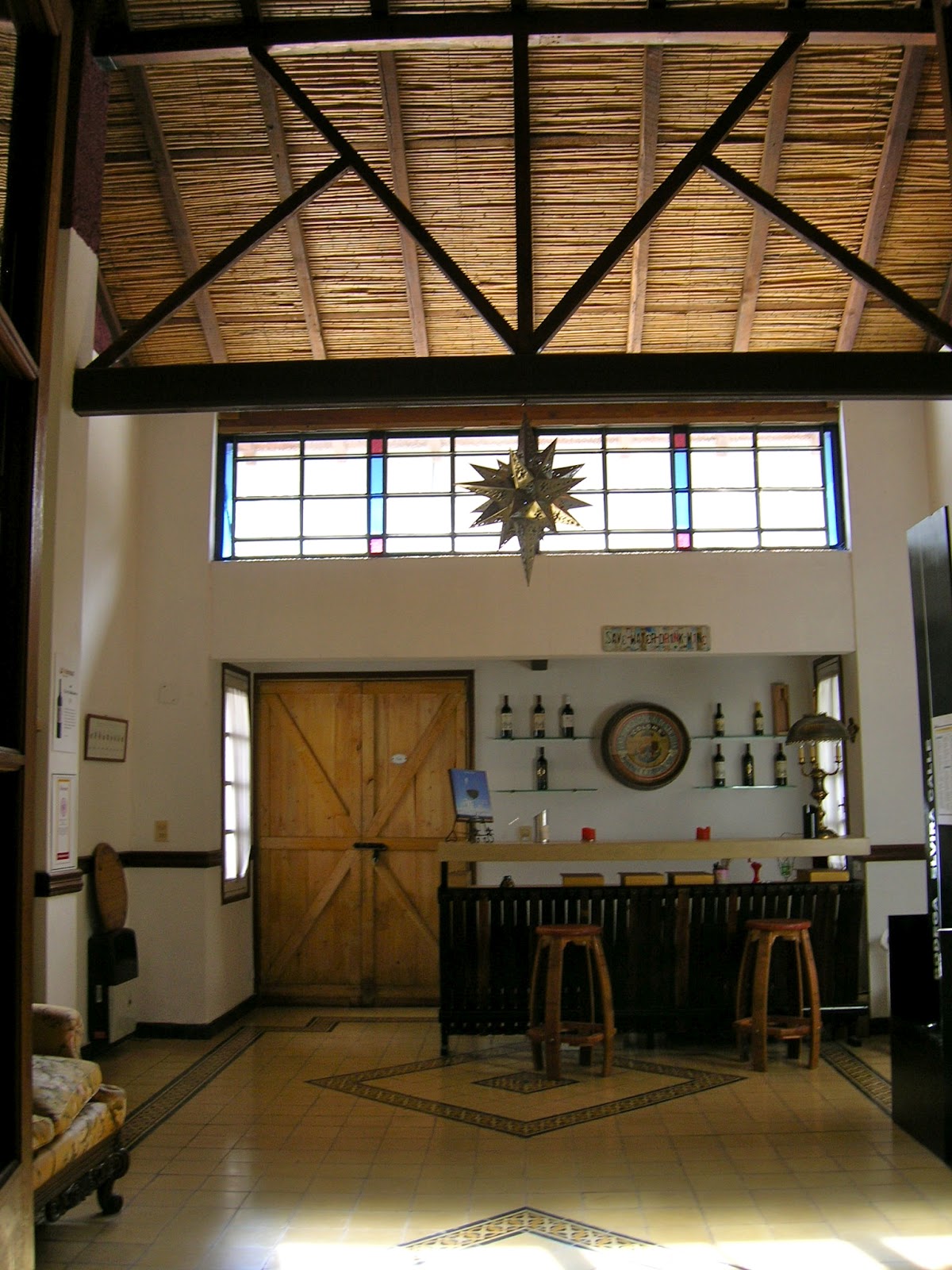
Here's the tasting room of the chalet we stayed at via Airbnb. Our stay included a free bottle of the chalet's wine (Bodega Calle) each night. And here's the backyard...


I'll get to the wine in a minute. First, we did this:


And then some of this:


Before happily stumbling upon the obscure but impressive Jerome brewery (find out more about it here). We had wanted to go but didn't know how to find it -- luckily, we passed it on the way to the horseback riding place in the Potrerillos.


We drank some of this:
And ate some of this:

The next day, we attempted a wine tour of Maipú by bike. We chose Mr. Hugo as our bike rental company because of good reviews. Let me tell you that this was quite an experience. You get this little map of the area with a handful of wineries and other interesting places and you think "aw, how fun and adorable is this?!" And then, not far down the road, you realize that the bike lane does not continue and you're sharing a bumpy and broken highway with trucks and traffic. Oh, and then you realize that everything is way more spread out than you'd thought in your crooked little mind that thinks it's on vacation. And so you KNOW that you're not going to make it to even half of those great places on the map. 


Finally, you'll arrive somewhere, probably dying of exhaustion, and you'll wonder how you're ever going to hold a sophisticated glass of red wine in your sweaty calloused hand. But, if you head for Tempus Alba, fear not. Their brilliantly air conditioned restaurant is the perfect place for a delicious lunch to accompany a six wine tasting. I'm serious - the food was the best of our trip. 


But I didn't take a picture of it because this was a wine tour, after all. The prices are quite reasonable for the quality and service. The tasting was around 30 pesos and lunch was about 40-50 pesos for a plato principal. Here's the view from the patio:


We managed to cram in one other winery tasting (at some snotty place) before booking it to Trapiche to make it in time for our scheduled tour. I had more fun playing in the fountains than on the actual tour, but it was mostly air conditioned so I didn't gripe!


Plus, the tour ends with a tasting of three Trapiche wines (included in the tour price - I think it was around 35 pesos). Trapiche is one of the most well-known, commercial brands of Argentine wine so, of course, it lacks the charm of a boutique winery but it's still good wine and you get a look inside an industrial brand.


That was, sadly, all the wineries that we made it to that day on the bike tour. We were too exhausted to ride out to the olive oil factories and the wine museum had closed. But we passed close to Historias y Sabores on the way back and stopped for a 20 peso tasting that included chocolate, tapenades, jams, and liqueur. And we took home some Chardonnay jam.


We went ahead and returned the bikes on time, though Mr. Hugo doesn't hurry you and he gives you another glass of wine upon your return. You'd think I'd have been flat out drunk by then, but the biking must have sobered me up quite quickly. So we went to this nearby (it's on the bike map) cerveceria just before closing time.


Wouldn't you know it -- there was another tasting! This one was cheaper.


So that was the end of the bike tour for us. The map from Mr. Hugo was helpful, as his staff wrote out the prices and closing times for all of the stops for us. Some places might require reservations, like Trapiche, so it's still helpful to do some research ahead of time.  We also got a discount from Hugo for the restaurant at the DiTomasso winery so we went back the next day for lunch.


The power went out so we drank cold wine and ate cold salads. I would have loved to have had lunch in the vineyard at Cecchin but when we got there (and it is NOT easy to find) they told us they were full, even though we called the day before and they said reservations were not needed. Hmmph! I guess Mendoza is more of a winging-it kind of trip.


Finally, our last stop was at Finca Flinchman - my favorite bodega. We had to make a tour reservation and it's about 20 kilometers outside of Maipú, but it was worth it.


The free tour included a free tasting! And it featured this lovely sparkling Chardonnay Malbec. Yep, you read that right.


We took home a few bottles of our favorite Malbec, Gestos, which is a blend of the varietal from two altitudes, along with as many other wines as we could carry. Unlike the majority of the other wineries (that cater to dollar-toting tourists) the prices at Finca Flichman are a steal - way cheaper than we can get here in Rosario and are in pristine condition.


I can't believe it took me so long to get to Mendoza. Now, it's going to have to be a recurring pilgrimage. I'd love to try some of the upscale wineries and restaurants but I haven't figured out how to play the lottery here yet. And I'm not sure it would be enough. We got lucky with the rental house, which made our trip so much more affordable by splitting it between the five of us - plus we were able to cook our own meals.

In addition, we rented a car (from a local company instead of an international one - cheaper still!) and it made the trip. Without it, we wouldn't have been able to stay out in Lujan de Cuyo or have made the trip to the excursion spots and wineries so easily. We even ended up on the Dakar route and were passed by some of the competitors -- this was a different kind of vacation.

Monday, June 27, 2011

Alfajores Santafesinos: Take 2


Yep, this was my second attempt at making the official alfajor of Santa Fe province. The first attempt, well, it taught me a lesson on meringues. I crossed a lot of lines with this recipe. First, I made a completely Argentine concoction, which is pretty much in opposition with almost all of my posted recipes. I usually try to replicate the tastes of home with what is available to us down here. Second, I had to get over my fear of raw eggs -- which, it turns out, isn't too hard when they taste like fresh marshmallow. So, thanks to Katie's challenge and encouragement, here I am embracing a taste of our current homeland.

The defining characteristics of alfajores santafesinos are (thick!) layers of dulce de leche sandwiched between thin crispy cookies and a sugary, egg white glaze that slightly crackles on your tongue as it dissolves. As a vegetarian, my challenge was creating a thin, crispy cookie without using lard. In my first attempt, I followed a recipe that called for melted butter - these shrank up hopelessly in the oven and weren't at all flaky.

The baked cookie inside of the cookie cutter - Just look at that shrinkage!
So, I asked around for suggestions - but nobody had any clue. Seriously, no one I know in Santa Fe could help me out with a recipe. But everyone could describe the perfect alfajor, and warned me not to screw it up. Hmmm. No pressure. I did, however, get a Sandra Lee-like suggestion to use pre-made empanada dough instead and, in my desperation, I did so. I will get to that later.

In the end I settled on this recipe from La Majuluta, and swapped out lard for an equal amount of vegetable shortening. Also, I translated it all by myself so there's another big girl victory. I tried it her way (still shrinkage problems), but also switched it up with my knowledge of pie crust makings and that worked way better for me.
Top: Pre-made dough, Bottom Left: Made with cold shortening, Bottom Right: Made with melted shortening 
Cookies:
300 grams all-purpose flour
1 pinch of salt (that's a direct translation, so get to pinching)
60 grams vegetable shortening
2 egg yolks
100 ml warm water (do you know that American measuring cups actually list ml? nice.)
1 Tablespoon booze (some recipes call for anise liquor, but I used vanilla vodka)
A few drops of lemon extract (which I didn't use, but suggest)

Filling:
400 grams dulce de leche repostero (specifically for baking)


Glaze:
200 grams sugar (superfine if you've got it)
80 ml water
1 egg white, room temperature

Whisk together flour and salt. Use a pastry cutter or two knives to blend in the chilled shortening (see, here's my pie crust expertise at work). Stir in the yolks, water, booze, and extract to form a crumbly dough - try not to over mix, just get it to stick together. Form a ball and flatten slightly, to create a disc shape (to make rolling out easier). If you have limited counter space, you may want to divide the dough into two discs. Cover and put in the freezer for at least 20 minutes, or until you're ready to roll it out (if you leave it longer, let it sit out for 10-15 minutes before rolling). Roll out on a lightly floured surface to 1.5 mm thickness (thinness!). Use a 7 or 8 cm cookie cutter to cut into circles and prick them with a fork to prevent puffing (I got 39 cookies out of it, after re-rolling the scraps.) Bake at 200C/400F for 10 minutes, or until they begin to turn golden. Let cool. Assemble a three-cookie-layer sandwich using nearly one full tablespoon of dulce de leche between each layer.

Make the glaze by bringing the sugar and water to a boil until the mixture reaches 112C - I got a candy thermometer to ensure success this time around. Start beating the egg white shortly before the sugar hits 112 (beat on low speed for maybe 1 minute). Let the syrup cool briefly, like 20-30 seconds or when the needle on the thermometer starts to drop. Slowly add it to the egg while you continue to beat it (no one wants to be defeated). It shouldn't take more than 30 seconds to combine them and get a nice shiny white glaze - like thin marshmallow fluff. Use a pastry brush to immediately brush the sandwiches with the glaze - this is super tricky and I found it impossible to get all of the sides covered, but work fast and at least spread a thin layer on top. Let them drip and dry (which takes about 2-3 hours) on a cooling rack.

Immediately after adding the glaze
Now, as I mentioned above, you can use pre-made empanada dough for the cookies. I tried it with La Saltena's small rounds (8cm) - poking them and baking for 10 minutes. This, however, resulted in a giant alfajor that disturbingly resembled a combination of the Stay Puft Marshmallow Man and a BK Stacker, and was too chewy to qualify as a cookie.

Alfajor Sandraleesino
I'm glad that I added a classic Argentine dessert to my recipe box, and I'm especially glad that I wrote it out in English - that's one less hurdle for the next round.


For more delicious alfajor recipes from all over Argentina, please stop by these blogs!

Alfajores Marplatenses: Seashells and Sunflowers
Alfajores Cordobeses: From Argentina to the Netherlands, For Love!
Alfajores Mendocinos: From Argentina With Love
Alfajores de Maizena: Ana Travels
Alfajores Salteños: Buenos Aires Foodies, Bee My Chef


Wednesday, May 25, 2011

Pastelitos!


In celebration of 25 de Mayo this year, we fried dessert. Sure, last year it was soup. This year it was serious. Last weekend at my father in law's birthday party we ate the most delicious pastelitos, aka warm, fried dough sprinkled with sugar and oozing with something sweet. Here's a photo of them in all their fried glory by Diego Llarrull.

Photo by Diego Llarrull
A post on From Argentina With Love convinced me that these are quite simple to make...just in time for 25 de Mayo! Instead of a recipe, I'm just going to say that we used pre-made empanada dough rounds (Yuli), some filling, and some sugar, along with oil for frying and almibar. To be more specific, we placed a square of filling - either dulce de membrillo, chocolate, or a spoonful of dulce de leche - in the center of one dough round, wet the area around the filling and then topped with another dough round, sealing the dough around the filling. 


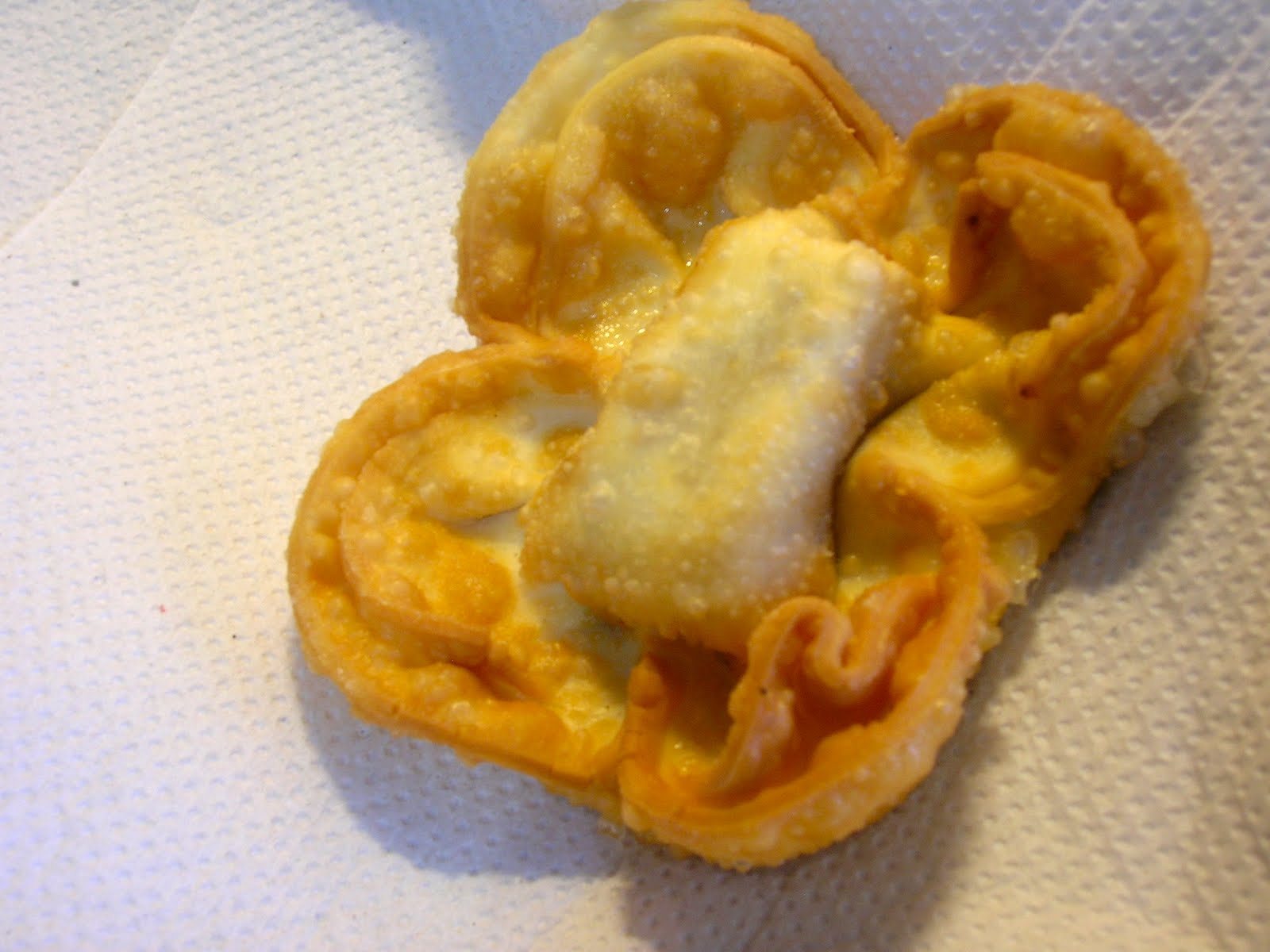
To make this lovely flower shape, place your forefingers under the dough on opposite sides of the circle, pull up slightly and pinch the dough together using your middle finger and thumb. Repeat on the other side of the circle. We didn't moisten and and seal the edges so that we could have more fried dough surface area. However, it is advisable to do so if you use dulce de leche as a filling.


Dulce de membrillo is a traditional filling for pastelitos.


Chocolate is not.

This is not a science project, it's a jar of homemade (by the afore mentioned father in law - he's a real Renaissance man!) dulce de membrillo. The syrup (which results from boiling membrillo with sugar) is called almibar - we'll use this later.


So we take our little dough creations...whoops, some membrillo is poking out. But, no worries.


And we fry them in some hot oil (over medium heat) - this is sunflower oil.


They take about 1-2 minutes each to turn golden, and then should be removed to a paper towel where they will be immediately drizzled with a spoonful of almibar or sprinkled with sugar, or both!


Not long afterwards (because they should be eaten warm) they will be taken to the table to be consumed immediately with patriotic gusto.


Oooh, melty chocolate. (I'm warning you, this is not a traditional filling and may cause funny looks from locals)


Ooozing dulce de leche (also not traditional for pastelitos, watch yourselves)


Here's a familiar taste. Happy 25 de Mayo, Argentina. Sorry if I have displayed unpatriotic behavior by changing up the fillings, but they're delicious. 

Tuesday, December 14, 2010

Argentine Gifts - Drink Edition


I'm running out of time but wanted to mention a few other uniquely Argentine gifts. If you've ever been to Argentina you probably recognize the bottle of Fernet Branca above. This tiny version was found at a wine store and will be much easier to lug home than a full bottle but it still gives the recipient the full Argentine experience. Read more about Fernet here


If you want to give a mate to someone who won't actually drink it, how about a keychain from Raices instead?


And finally, I've mentioned Inti Zen tea before, but it's worth a reminder. The variety box gives you 8 blends including yerba mate and dulce de leche. Happy Holidays from Argentina!